


Timber fencing Melbourne
Timber paling fences for Melbourne homes
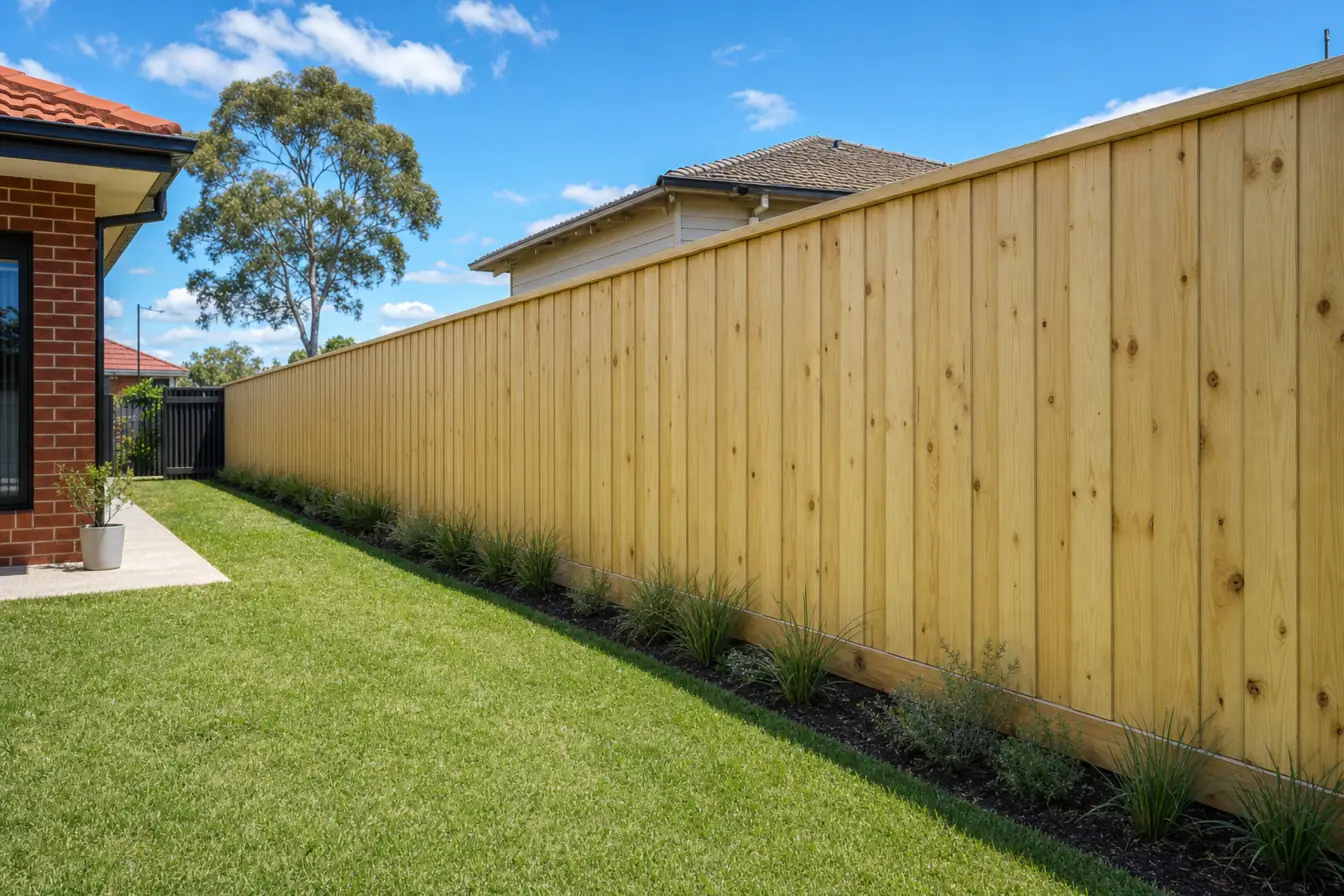
Timber fencing across Melbourne: our installers build paling fences in treated pine or hardwood.
Palings are the upright timber boards that make up the fence.
- Every quote is free and in writing
- Our installers are insured
- We repair timber fences too


Get a free timber fence quote
Timber Fencing is ticked for you. Add your suburb and rough metres on the next step.

Timber paling fences at a glance
1.8 m
A common backyard height
Timber yards sell kits for fences from 1.5 m to 2.4 m high.
Pine or hardwood
The palings
Treated pine is the usual choice.
Timber or steel
The posts
Timber posts are usually set in concrete.
Plinth
A board along the bottom
It closes the gap underneath, so small pets can't slip out.
Capping
A board along the top
It gives the top of the fence a straight, finished line.




How it works
How getting a timber fence works
Tell us about the job
Send your suburb, roughly how many metres and the style if you've picked one. The form also asks if you need the old fence taken away.
We measure up if needed
If the job needs it, we come out to measure the boundary and check for slopes and tree roots on the line.
You get a written quote
It's free, and you can take your time over it.
We build your fence
The posts go in first, then the rails, the timbers that run between the posts. The palings are nailed to the rails, and capping or a plinth goes on if you chose one.




Paling fence styles
Choosing a paling fence style
The style decides how private the fence is and how it looks from your side.
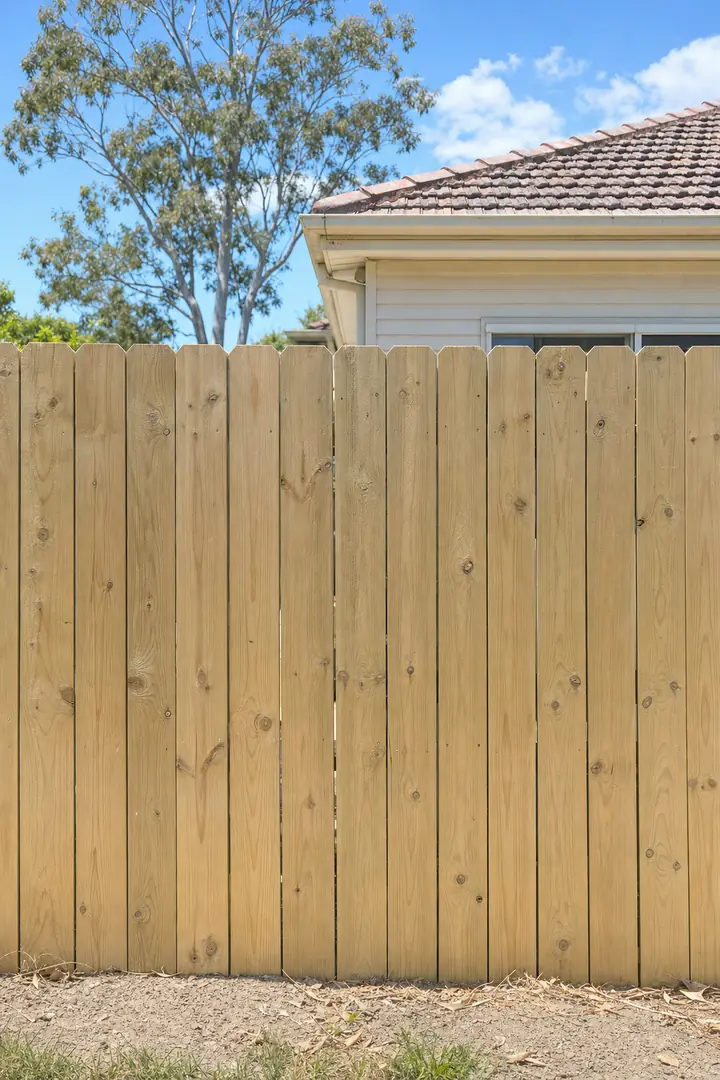 Gaps can open up
Butted
The palings sit side by side in one layer. As the timber dries out, thin gaps can open between some of them.
 No gaps
Lapped
Two layers of palings overlap, the front row covering the gaps in the back row, so nobody can see through.
 No gaps, capped top
Lap and cap
A lapped fence with capping, a flat timber board along the top that keeps rain off the cut tops of the palings.
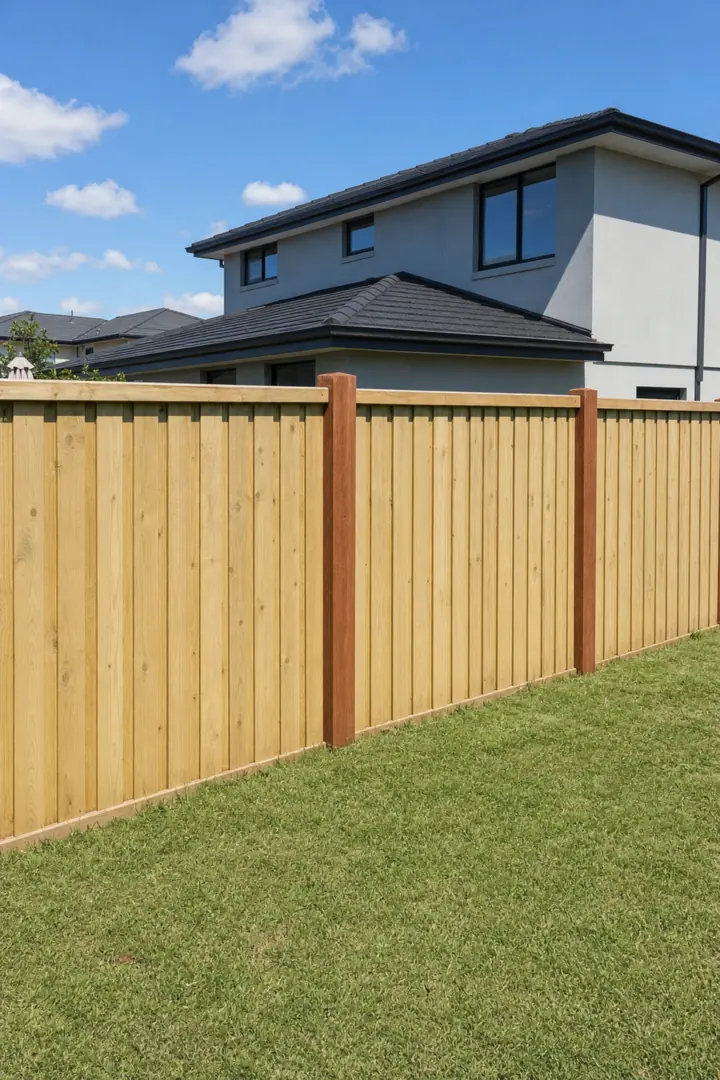 Posts on show
Exposed post
The posts stay visible on your side, with the palings fitted between them. Some new housing estates require this style.
Other timber fences
Picket, slat and post and rail fences
Palings suit most back and side boundaries. For a front yard, a courtyard or a paddock, one of these may suit better.
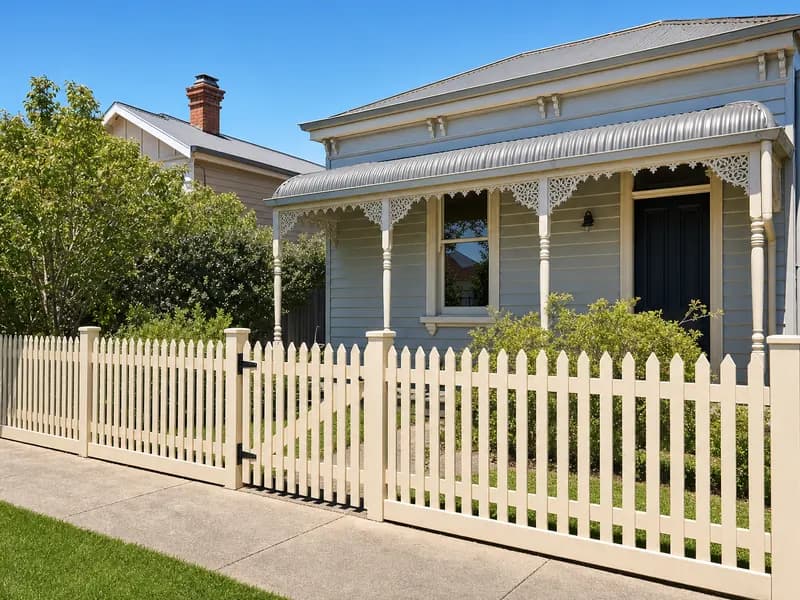
Picket fences
Pickets are narrow upright timber boards, spaced a little apart on horizontal rails and often cut to a point on top. A low, painted picket fence is the traditional front fence on Victorian and Edwardian houses.
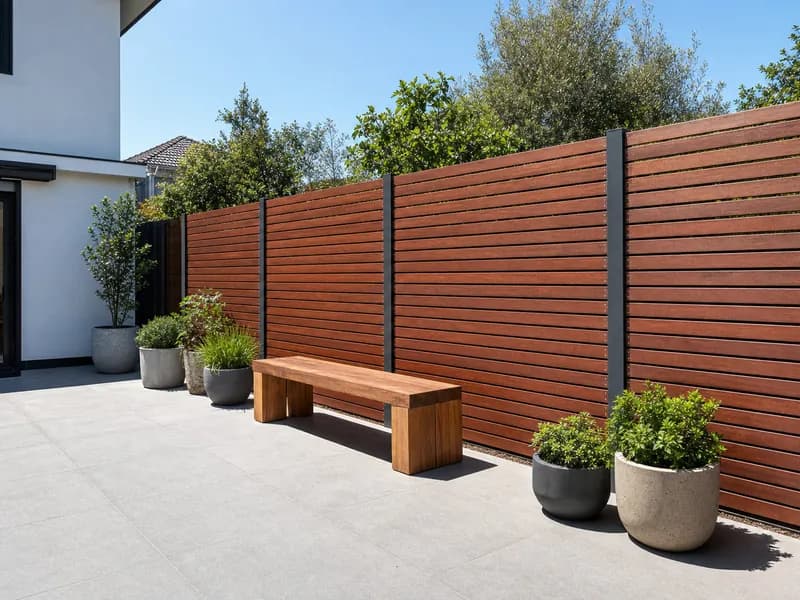
Slat fencing and merbau screens
Slats are narrow timber boards, usually fixed in level rows with small, even gaps, and closer gaps give more privacy. Merbau, a hardwood that darkens to a reddish brown as it ages, is a popular pick for a modern front fence or a patio screen.
Merbau can stain paving at first
Rain washes tannin, the natural colouring in the wood, out of new merbau and onto concrete or pavers nearby. The marks usually fade with time, and hosing them off early helps.
Post and rail fencing
Two or three timber rails run between the posts, their ends slotted into holes cut through each post, called mortices. It's an open fence that marks out a paddock, a horse property or the front of a rural block.



Gates and repairs
Timber gates and paling fence repairs
Add a gate to your new fence, or get the fence you have fixed.

Timber side gates
Each one is made from the same palings as the fence. A diagonal brace, a timber running corner to corner on the frame, stops it sagging.
Gates
Timber driveway gates
Double gates across a driveway can match a lapped or capped fence. Tell us the opening width and we'll price them.

Broken palings
A cracked or missing paling can be swapped out on its own. The new timber starts paler and, left bare, fades towards the same grey.
Fence repairs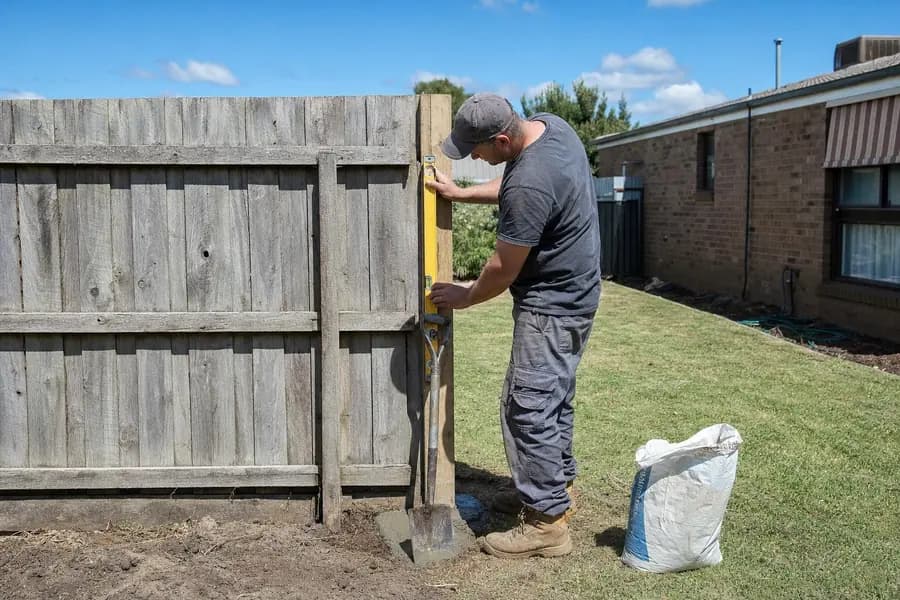
Leaning fences
Most leans start at a post that has rotted or come loose. Our installers reset or replace it and fix the rails back on.

Timber choices
Treated pine or hardwood palings
A standard paling fence is built from treated pine, and hardwood is the other common pick.
Treated pine
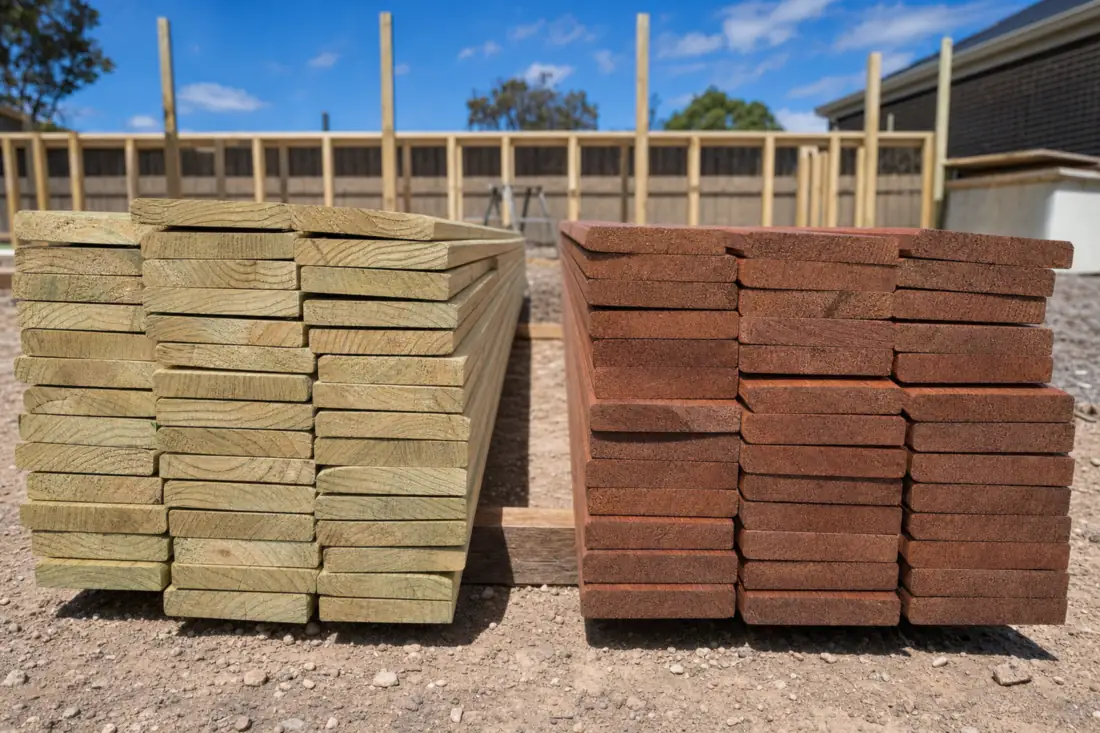
Pine that's been treated with a preservative, so it stands up to rot, termites and insects.
Hardwood
Timber from native trees. Timber Queensland's fence guide calls for the two most naturally durable classes of hardwood.
Sapwood, the paler outer layer of the log, still needs treating in any hardwood.
What H3 and H4 mean on treated pine
Treated timber is stamped with a hazard class, a rating for where it can safely go.
Treatment classes on WoodSolutionsAbove the ground
Outdoor timber that gets wet and dries out: the palings, the rails they're nailed to and the capping.
In the ground
Timber in the ground or that stays damp. Posts and the plinth need H4 at least.

Fence posts
Timber fence posts or steel posts
The posts hold the whole fence up, and a timber paling fence can stand on either kind.
| Timber posts | Galvanised steel posts | |
|---|---|---|
| Made from | ||
| Made from | H4 treated pine, hardwood or cypress, a native timber that holds up well in the ground. | Steel coated in zinc, called galvanising, to stop rust. |
| In the ground | ||
| In the ground | Treated timber resists rot and termites, but it's still wood and can decay at ground level in time. | Steel can't rot, and termites can't eat it. |
| Staying straight | ||
| Staying straight | Timber moves a little as it dries, and a post can twist. | Steel posts hold their shape. |
Not sure which suits your block? Say so on the form and we'll price both.
Get a free quote

Pricing
What sets paling fence prices
We price each fence from your details. These are what change the number.
Length
Pace out the boundary and give us a rough number of metres to start.
Height and style
Taller fences need longer palings and posts. Lapped palings add a second layer, and capping and a plinth add more.
Timber and posts
Treated pine on timber posts is the usual starting point.
The ground
Rock, tree roots, heavy clay and slopes all slow the digging.
The old fence
We can take an old timber fence away, priced on your quote. Old fibro (cement sheet) fences can contain asbestos and need a licensed removalist.
Gates and access
Each gate adds to the price, and a narrow side path means carrying everything in by hand.


In Victoria, neighbours share the cost of a basic dividing fence, and the Victorian Government gives a 1.8 m timber paling fence as an example. Whoever wants more, like a taller fence or dearer timber, pays the difference. Fencing rules on vic.gov.au
Get a free quote

Timber or Colorbond?
Timber fence vs Colorbond
Both give you a private backyard. They differ in looks and upkeep.

Where timber wins
The look of real wood
You can stain or paint it any colour, or let it weather to a soft silver grey.
It follows the ground
On a slope, the palings can follow the ground or step down in level sections.
Colorbond suits better if
You want next to no upkeep
Colorbond steel is painted at the factory and mostly needs a hose down, with no staining.
Colorbond fencingYou like a flat, modern colour
Colorbond comes in 15 solid colours.

Before you build
Before you build a paling fence
Talk to your neighbour
Agree on the style, height and timing. If you can't, you can send a fencing notice, a written proposal for the work and its cost. Your neighbour has 30 days to reply.
Victoria Legal Aid on fencesAgree which side gets the rails
One side shows the rails. If you can't agree, the law puts them on the same side as the old fence. With no old fence, they go on the side less exposed to weather.
The rule on vic.gov.auCheck if you need a permit
A side or back fence over 2 m high needs a building permit. Ask your council about front fences, corner blocks and heritage areas.
Check what's underground
Post holes can hit pipes and cables. Before You Dig Australia sends free plans of what's buried there.
Before You Dig Australia





Built to last
What makes a paling fence last
Ask any installer these questions before you sign, us included. The answers come from timber industry guides.
How deep do the posts go?
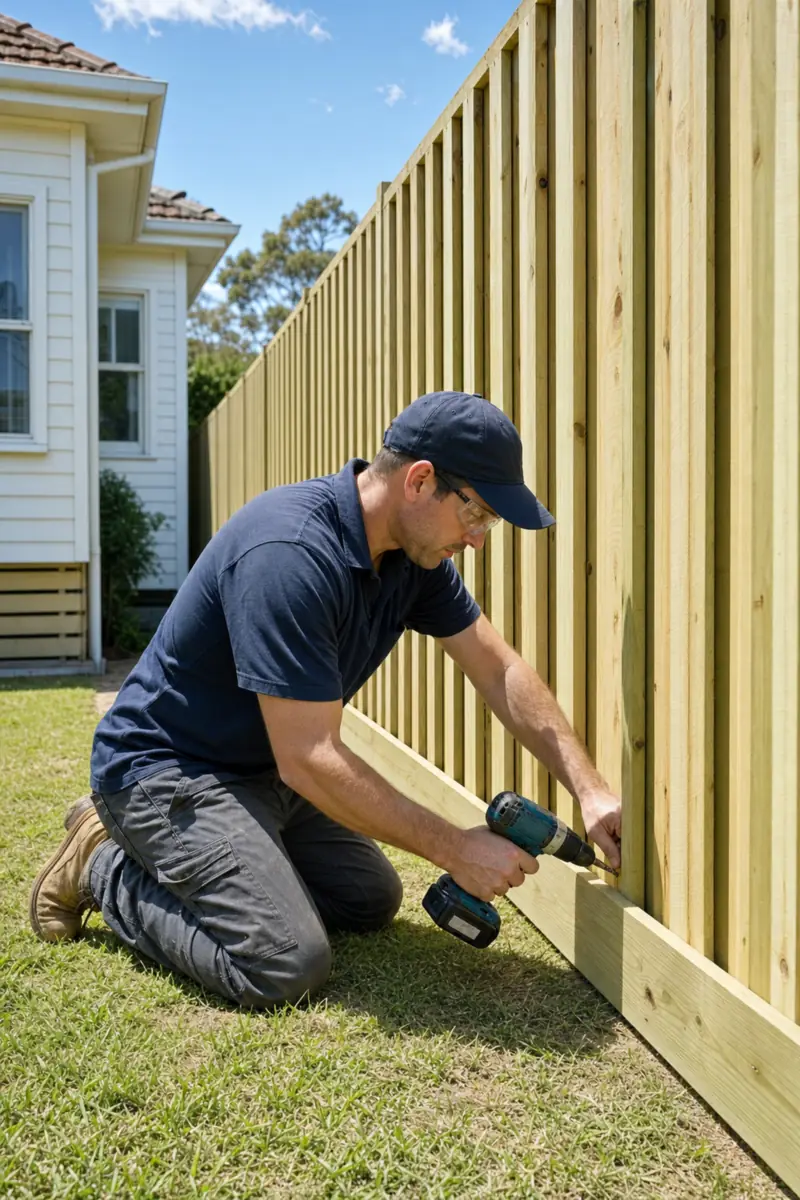
Timber Queensland's guide sets posts for a backyard-height fence about 600 mm deep, in holes at least 300 mm wide.
Do the post holes drain?
Coarse gravel under each post lets water drain away, and the concrete on top should slope so rain runs off.
How many rails?
A fence over 1.2 m and up to 1.8 m high needs three rails. Two are only enough for a low fence.
What are the nails made of?
Galvanised or stainless steel. Near the coast, stainless holds up better against salt air.
Are cut ends sealed?
Treatment doesn't always reach the centre of the timber, so fresh saw cuts need a coat.


Care and upkeep
Looking after a timber fence
A little care each year keeps the timber sound.
Once it's built
Choose a finish
Left bare, timber fades to silver grey and can split and warp. Paint or stain slows that down.
The first coat
Stain or paint it
Our installers can do it for you. How long new pine should weather first depends on the product, so we'll confirm the timing on your quote.
Every 12 months
Look it over
Walk the fence once a year. When the colour fades, it's time for another coat.


Keep the plinth clear
Mulch piled against the plinth holds moisture on the timber, so rake it back. If the plinth does rot, it's much cheaper to replace than the palings.


Timber fence questions
Timber paling fence FAQs
There's no set price per metre, because the timber, the style and any extras like capping or removal change it. Rates online are often for a plain treated pine fence only. Check what a price includes before comparing quotes. Your quote from us shows the full price before any work starts.
Up front they're often close in price. Over the years timber usually costs more to keep, because it needs staining or painting every few years and Colorbond doesn't. Ask us to price both on your written quote if you'd like to compare them.
It depends on the timber, the treatment and the ground. One Melbourne timber supplier puts treated pine posts in the ground at 15 to 30 years.
The law doesn't set one. Most new dividing fences are built the same as the old one, unless you and your neighbour agree on something different.
It depends on the paling width and the style. A butted fence of 150 mm palings takes about seven a metre, and a lapped fence takes more for its second row.
Guides and suppliers give different figures, because it depends on the rail size and the timber. We confirm the spacing for your fence on the quote.
Timber Queensland rates good-quality, light-coloured paint as the best protection. Cheap, dark paints that only form a skin on the surface can speed up rot.
No. Treated timber offcuts and sawdust shouldn't be burnt. Ask your council how to get rid of them.

Free timber fence quotes
Ready for a new timber paling fence?
Fill in the form and we'll get back to you about your fence.
Prefer to call?(03) 9123 6468
Request your fencing quote
It takes three quick steps.